Waqf as a Development Tool in Jordan: Challenges and Potential
Waqf as a Development Tool in Jordan: Challenges and Potential
The world today is experiencing unprecedented economic, social, and technological transformations, further intensified by the COVID-19 pandemic, which deepened financial and social crises and exposed the vulnerabilities of traditional economic models. These crises have highlighted the need to redistribute economic and social roles among the government, private sector, and civil society in ways that enable innovative and sustainable solutions to emerging challenges.
The “third sector,” comprising charitable organizations, cooperatives, and non-profit activities, has emerged as a key pillar in supporting government efforts, empowering marginalized groups, and strengthening social solidarity. In this context, Islamic Waqf is regaining a central position among development tools, particularly in Muslim-majority countries, where it represents an economic model based on sustainable giving directed toward the public good.
The Nature of Waqf and Its Economic Components
At its core, Waqf means preserving the original asset and dedicating its benefits to a charitable or public cause. It represents the transformation of wealth from consumption into production and service, as Waqf returns are used to provide educational, healthcare, social, and developmental services. Unlike other forms of giving, Waqf is characterized by sustainability, as the original assets are preserved and their returns are continuously reinvested.
Waqf has evolved to encompass fixed assets such as land and real estate, movable assets such as equipment, and financial assets such as cash and Waqf sukuk. It operates around three main pillars: revenue development, distribution of returns, and oversight, in accordance with Sharia principles and legal regulations.
Waqf and Sustainable Development
The objectives of Waqf intersect with several Sustainable Development Goals (SDGs), particularly SDG 1: No Poverty and SDG 10: Reduced Inequalities. Waqf can also contribute to financing vital projects such as education, healthcare, and support for small businesses, particularly in light of the financing gap faced by developing countries, estimated at approximately $2.5 trillion annually, according to UNCTAD estimates.
Globally, Waqf is increasingly viewed as a model similar to Socially Responsible Investment (SRI), combining financial returns with positive social impact. Within the Islamic context, Waqf provides a Sharia-compliant financial instrument suitable for long-term investment and capable of being directed toward national development priorities.
Waqf in Jordan: Current Situation and Challenges
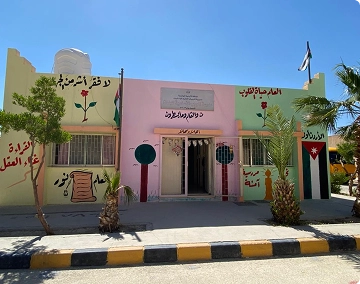
Despite the enormous potential of Waqf and the emergence of several recently established endowments, such as Thareed Waqf, which focuses on feeding people in need; the King Hussein Cancer Foundation Waqf, which contributes to covering cancer treatment costs at the King Hussein Cancer Center; the Education Waqf, established by former Prime Minister Dr. Omar Al-Razzaz during his tenure as Minister of Education to help the Ministry meet its needs for schools and kindergartens; and Waqfiyat Al-Ataa, established by Haj Hamdi Al-Tabbaa for the same purpose, along with a limited number of other endowments, the role of Waqf in Jordan remains very limited and is largely concentrated on mosque construction.
There is a clear absence of a strong investment and developmental Waqf sector. According to official statistics, there are approximately 10,000 Waqf entities, with 96% concentrated in mosques and cemeteries, while investment Waqf represents no more than 3.7%.
The limited activation of Waqf in Jordan can be attributed to several factors, most notably the absence of a clear national strategic vision aimed at activating Waqf as an investment and development tool, limited public awareness of its importance, shortcomings in legislation, and the involvement of multiple administrative entities without effective coordination.
The Waqf ecosystem also faces weaknesses in governance and data management, an investment environment that is not sufficiently attractive due to land-registration challenges and limited economic feasibility, as well as a shortage of specialized skills and expertise in the field.
Waqf as a Key Contributor to Addressing Jordan’s Development Challenges
Jordan faces complex economic challenges, including high levels of poverty and unemployment and shortages in educational and healthcare infrastructure. For example, in the education sector, there is an estimated need to build approximately 60 schools annually over the next decade, at an estimated cost of JOD 60 million per year, amid declining government capacity to finance such projects.
In this context, activating social and investment Waqf could contribute to:
-
Financing the construction of schools, kindergartens, and healthcare centers.
-
Supporting the agricultural sector and small and medium-sized enterprises.
-
Providing care services for people with disabilities and the elderly.
-
Creating new employment opportunities and stimulating local economic activity.
Learning from Successful International Experiences
Successful Waqf models can be found in countries such as Kuwait, Malaysia, and Türkiye, where independent Waqf funds have been established with specialized management structures operating according to modern governance principles. These institutions oversee major educational and healthcare projects, achieving both financial sustainability and social impact.
The experience of leading global universities, such as Harvard and Oxford, which rely significantly on endowment funding, further demonstrates that Waqf is not merely a charitable instrument. It can also serve as an economic mechanism generating sustainable returns and significant long-term impact.
Conclusion
Waqf in Jordan represents a promising development opportunity that remains largely underutilized despite its rich historical legacy. To activate it effectively and sustainably, Jordan needs to adopt a national strategic vision aimed at integrating Waqf into the development process and distinguishing between religious Waqf, primarily represented by mosque construction, and social Waqf, which contributes to community development and supports the government in providing essential services across various sectors.
There is also a need to restructure Waqf administration through an independent authority, modernize legislation, develop a more supportive investment environment, establish specialized funds, build institutional capacity, raise public awareness, and integrate technology to ensure greater transparency.
Implementing these recommendations could transform Waqf into an effective complementary tool capable of helping bridge development gaps, strengthening social solidarity, and contributing to a more sustainable future for Jordan.