why waqf
Waqf: A Sustainable Model for Investing in People and Development
Throughout history, Waqf has been far more than a means of charitable giving. It has been one of the most important systems that contributed to building civilizations, financing education, healthcare, scientific research, and public services through a model based on sustaining resources and maximizing their impact for the benefit of society.
Today, as economic challenges continue to grow and the need for long-term development solutions increases, Waqf is reclaiming its role as a model capable of supporting sustainable development, strengthening community partnerships, and providing stable sources of funding for initiatives with a lasting public impact.
What is Waqf?
From a development perspective, Waqf is a model of sustainable community investment based on dedicating assets that are efficiently managed and developed, with their returns continuously directed toward achieving public benefit. This contributes to financing development and enhancing its sustainability.
Waqf represents a model that brings together social responsibility and sound management, transforming resources into sustainable impact that serves people and communities across generations.
The Sharia Perspective
From a Sharia perspective, Waqf means “retaining the principal and dedicating its benefit”—preserving the endowed asset while investing its benefits or returns and directing them toward charitable purposes designated by the donor. This ensures the continuity of its benefit and fulfills the objectives of the Waqf.
Why Do We Need Waqf Today?
The world today faces growing development challenges that require solutions beyond traditional financing and rely on models capable of providing sustainable resources to support vital sectors over the long term.
In this context, Waqf emerges as a model that brings together sustainability, social responsibility, and institutional management. It provides a practical framework that can be utilized to support education, healthcare, the environment, culture, scientific research, and other areas of development.
Why Did the Founders of Waqfiyat Al-Ataa Choose Waqf as Their Model?
Because we believe that education requires sustainable resources, not temporary solutions.
For this reason, Waqfiyat Al-Ataa adopted Waqf as a development and investment model built on developing assets, ensuring sustainable funding, and maximizing impact. This contributes to supporting the educational environment and investing in people.
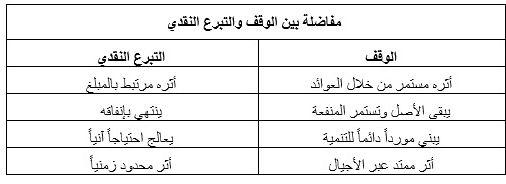
Waqf... An Investment with an Enduring Impact
Cash donations are among the most common forms of charitable giving. However, Waqf—including cash endowments—adds another dimension to giving: sustainability that enables lasting development and ensures that the impact of a contribution continues over time.